Kid-friendly beaches in Auckland, ranked by age group
What is the safest beach in Auckland for kids?
Mission Bay and Takapuna, both on the sheltered east coast, have calm, shallow, patrolled water and are the safest default choice for children of any age. The west coast black-sand beaches (Piha, Muriwai) have genuine rip currents and are not suited to unsupervised swimming with young kids.
Not all of Auckland’s beaches suit children, and the difference isn’t subtle — the city sits on two coastlines with very different water conditions. This guide ranks the realistic kid-friendly options by age group, so you can pick a beach that matches your children’s swimming ability and your own comfort with supervision, rather than discovering the hard way that a beach’s reputation for beauty doesn’t mean it’s safe to swim at.
| Safest default | Mission Bay or Takapuna |
| --- | --- |
| Cost | free, public beaches |
| --- | --- |
| Lifeguard season | roughly late October to April |
| --- | --- |
| Avoid unsupervised | Piha, Muriwai, Karekare, Bethells |
| --- | --- |
| Getting there | Mission Bay/Takapuna by bus; west coast needs a car |
Auckland’s geography explains the split: the city sits on a narrow isthmus, with the sheltered, island-studded Hauraki Gulf on one side and the open Tasman Sea on the other. That single fact of geography determines almost everything else in this guide — calm, protected water on the gulf side, and genuine ocean surf with real hazards on the Tasman side. Neither coastline is inherently “better” for a family trip; they simply suit different ages, swimming abilities, and risk tolerances, and most visiting families end up combining at least one beach from each side over a longer stay.
Best for toddlers and young children: Mission Bay and Takapuna
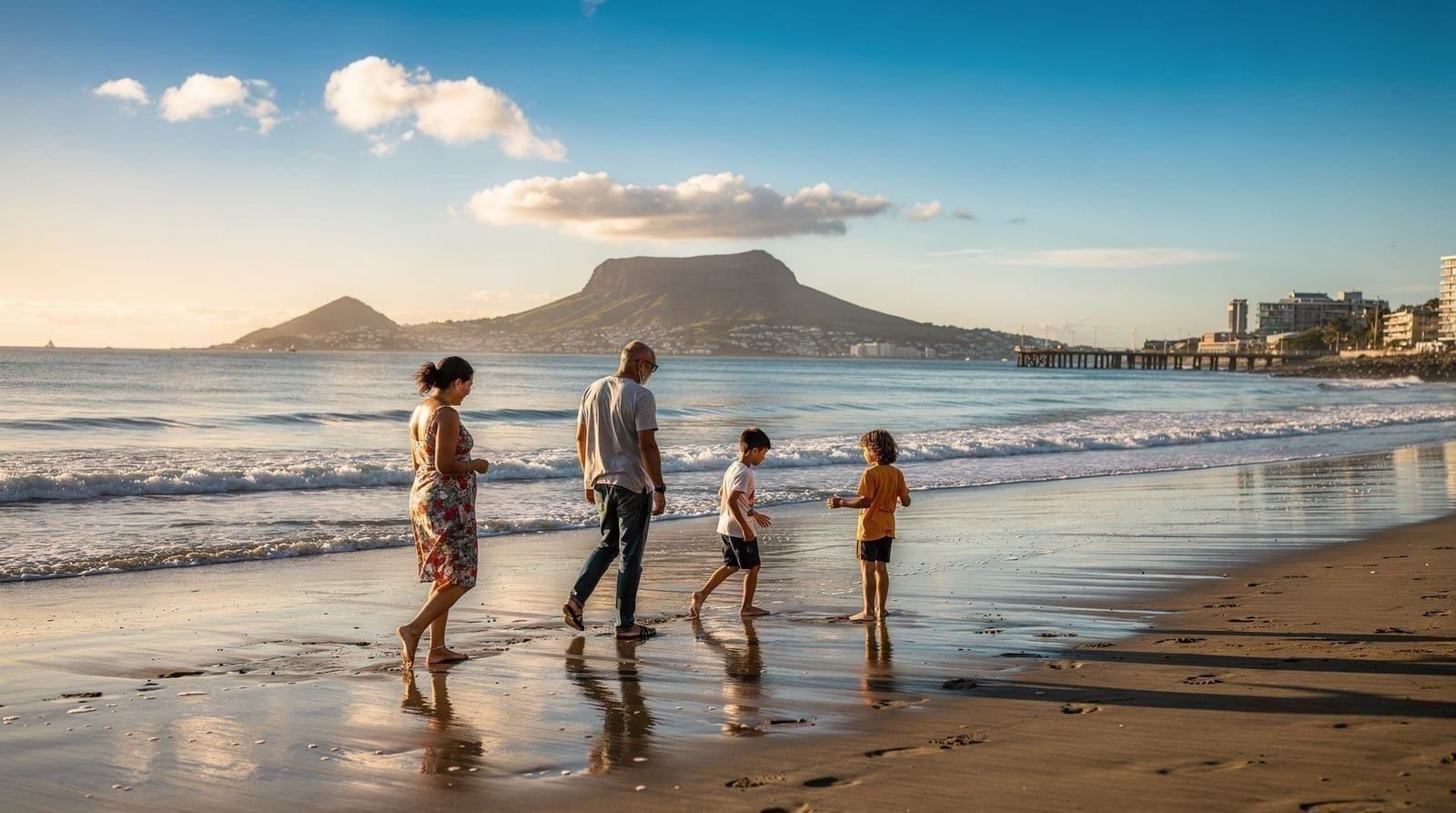
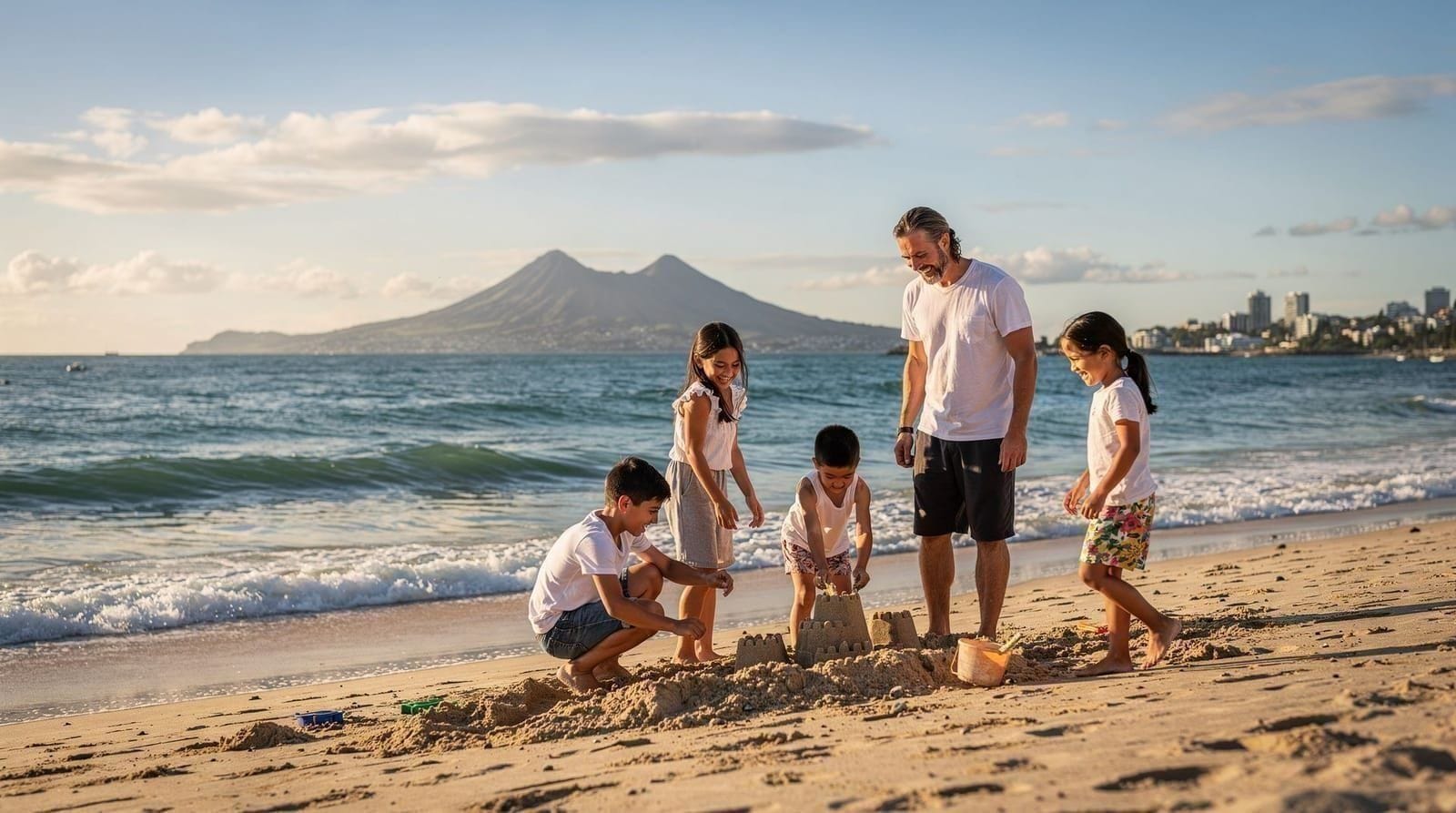
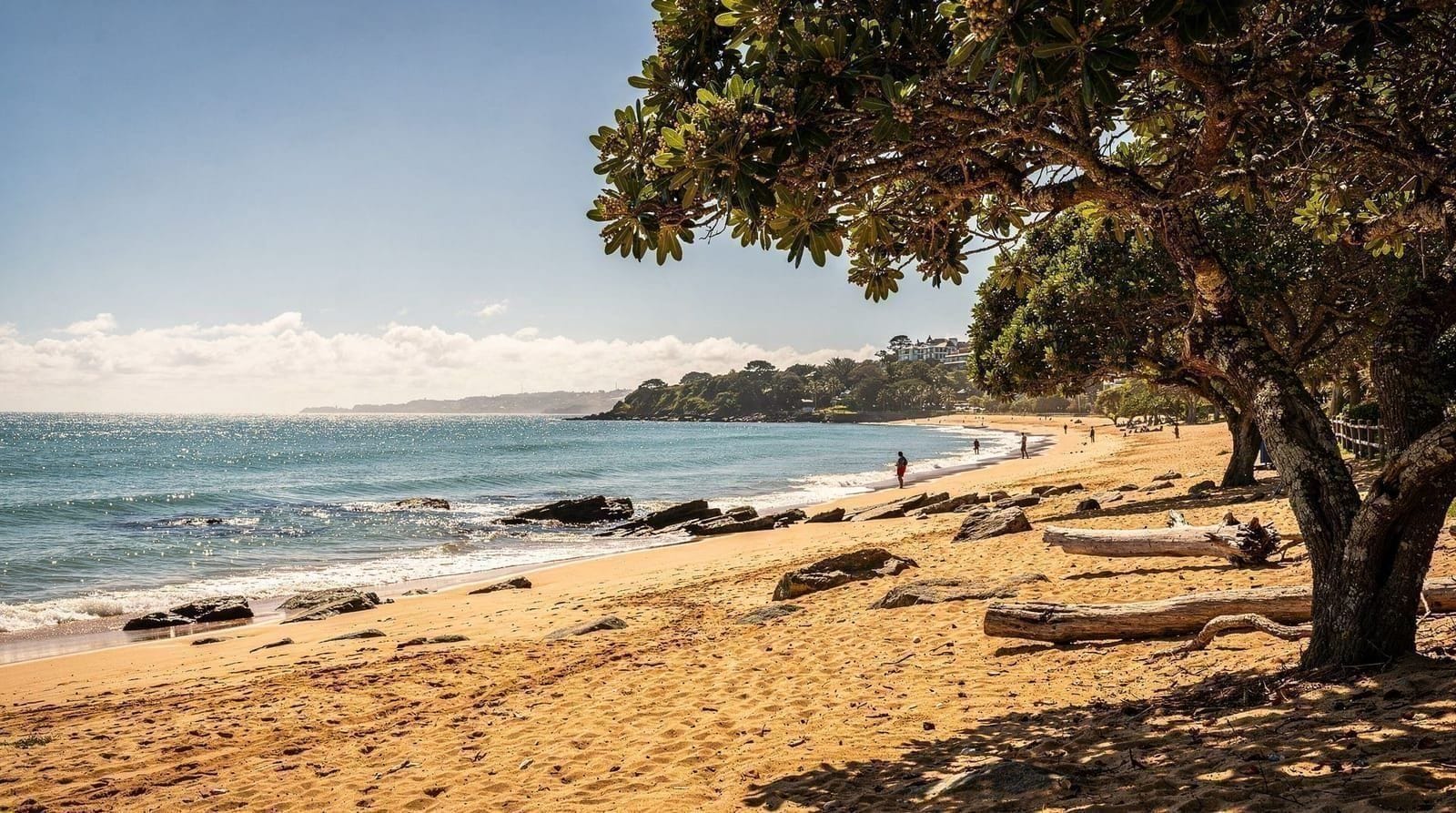
Mission Bay, about 10 minutes from the CBD along Tāmaki Drive, is Auckland’s most reliable family beach. The water is shallow, calm and gently shelving, which matters enormously with a toddler who wants to potter at the water’s edge without a wave knocking them over. A playground sits right behind the sand, and a strip of cafés and gelato shops makes it easy to combine swimming with a snack break. It’s also easy to reach without a car — regular buses run from central Auckland.
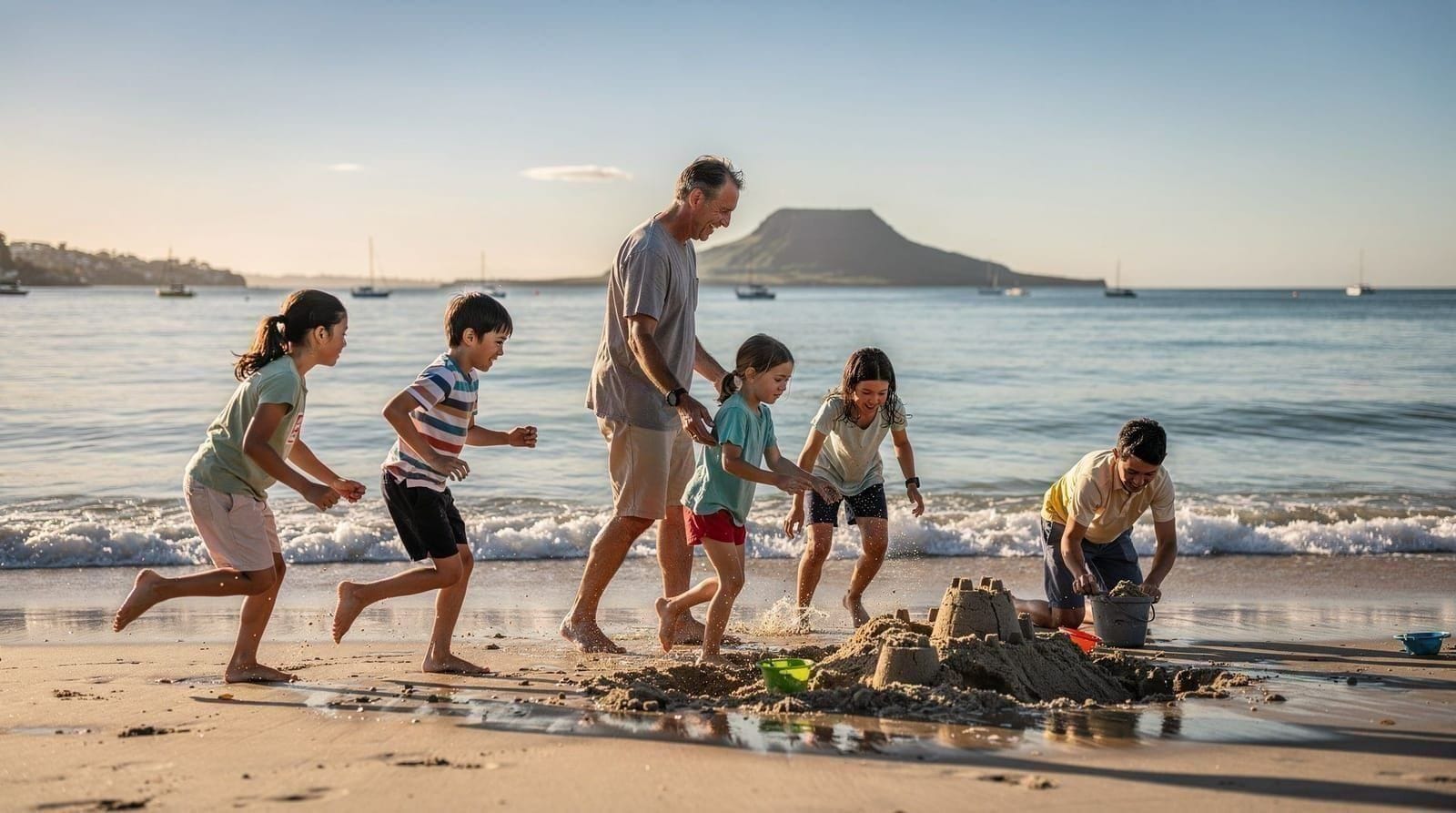
Takapuna, across the harbour on the North Shore, offers similarly calm water with the bonus of Rangitoto Island filling the horizon, plus a pleasant café strip right behind the beach. Slightly less crowded than Mission Bay on an average day, though it fills up on summer weekends too.
Both beaches run lifeguard patrols during summer (roughly late October to April), and both have genuinely gentle enough water that supervised toddler paddling is realistic rather than risky.
Good for confident young swimmers: Cheltenham and Long Bay
Cheltenham, tucked beside Devonport, shares the calm-water character of Mission Bay and Takapuna but with a fraction of the crowds — a good choice if your kids are old enough to swim independently and you’d rather skip the busier beaches. Views toward North Head add scenic interest for older children with more patience for looking at things.
Long Bay Regional Park, further north on the Shore, is the largest of the east coast options, with a grassy reserve behind the beach that suits picnics and longer stays — useful if your family wants a full afternoon rather than a quick swim. It’s a 30-40 minute drive or bus ride from the city, which keeps numbers down even in peak season.
For older kids and teens who want more adventure: Piha and Muriwai
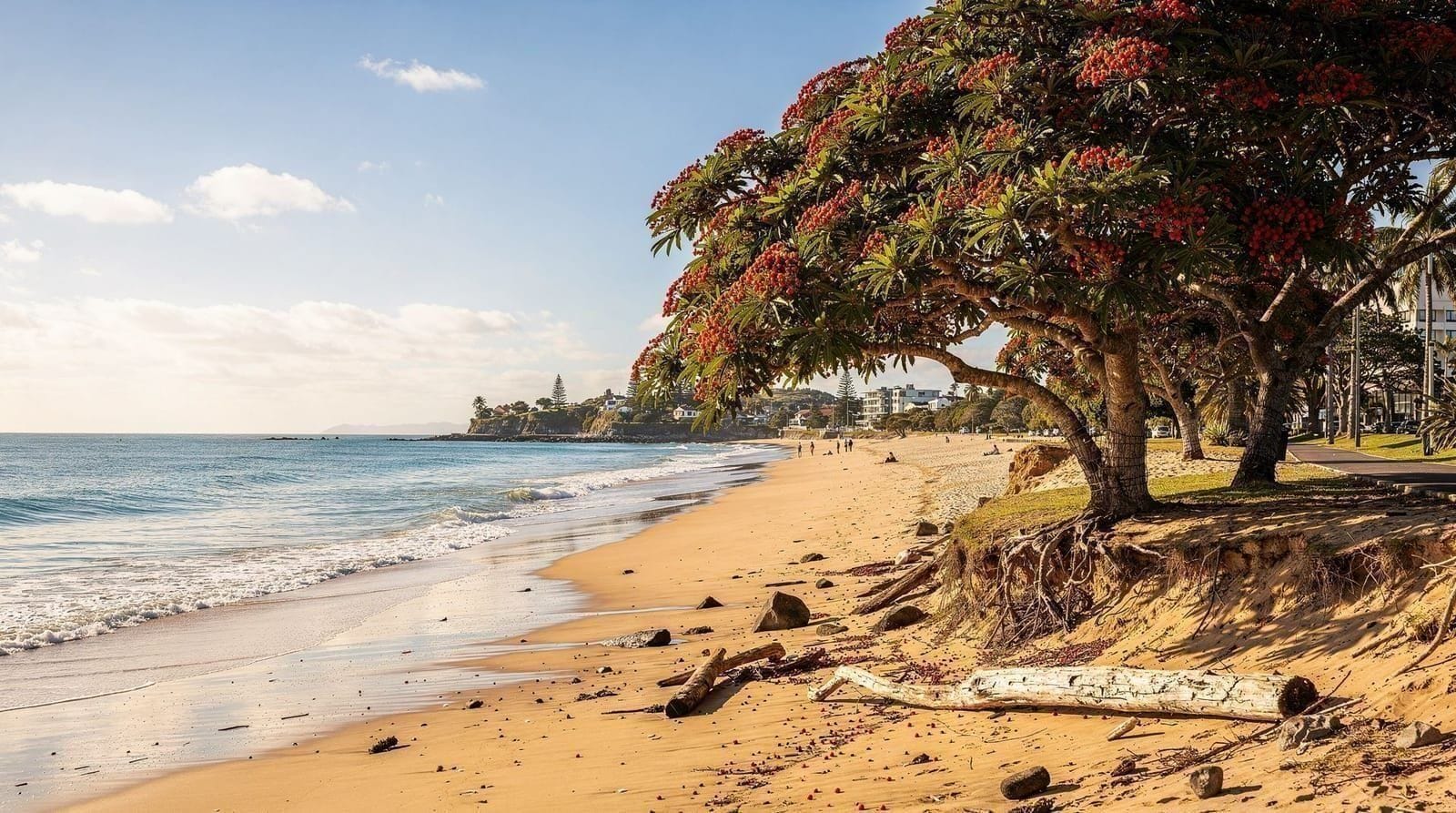
Piha, on the west coast about 45 minutes from the CBD, is dramatic — black volcanic sand and the towering Lion Rock — and genuinely appeals to older children and teenagers who want a beach that feels more like an adventure than a paddle. It’s also where the real hazards live: consistent surf and unpredictable rip currents mean swimming should happen strictly between the lifeguard flags during patrolled hours, and even then, direct supervision matters more here than at any east coast beach.
Muriwai, about 40 minutes north-west, combines a similarly dramatic black-sand beach with an accessible gannet colony on the cliffs above — a strong pick for older kids interested in wildlife, with viewing platforms a short, flat walk from the car park that don’t require going near the water at all. Treat the beach itself the same way as Piha: scenic and worth a visit, but not a casual swimming spot for young or inexperienced swimmers.
Neither west coast beach has reliable public transport access; you’ll need a rental car or an organised tour. See our family day trips from Auckland guide for west coast options that include transport.
Beaches to treat with caution or avoid with young kids
Karekare, near Piha, has no lifeguard cover most of the year and a longer unpatrolled stretch of coast — better as a scenic stop and short walk than a swimming destination with children. Bethells (Te Henga), further north, shares the same unpatrolled, undeveloped character; striking scenery, but not somewhere to plan a swimming afternoon with kids without strong local knowledge of conditions.
Beaches beyond the city: Waiheke and the Coromandel
If your itinerary extends beyond Auckland proper, a couple of further-flung options are worth knowing about for families. Oneroa Beach on Waiheke Island, a 40-minute ferry from downtown, is calm and sheltered, with cafés and a playground nearby — a good option if you’re already spending a day on the island for the scenery or wineries and want a swim stop that suits kids too.
On the Coromandel Peninsula, Hot Water Beach doubles as an activity in its own right: at low tide, visitors dig their own pool in the sand and hot geothermal water bubbles up to fill it, which tends to captivate children more directly than a standard swimming beach — though it only works within roughly two hours either side of low tide, so check tide times before planning around it. Both require more travel commitment than the city beaches above; see our family day trips from Auckland guide for the fuller logistics.
Facilities: toilets, playgrounds and shade
Facility quality varies more than beach quality across Auckland’s options. Mission Bay and Takapuna both have public toilets, playgrounds, and a reasonable amount of natural and built shade near the cafés, which matters over a full afternoon with young children. Long Bay Regional Park has toilets and picnic facilities spread across its larger grassy reserve, suited to families who want to set up camp for several hours rather than a quick swim. West coast beaches (Piha, Muriwai) have basic facilities near the main car parks but far less shade overall — pack a beach tent or umbrella if you’re planning a longer stay rather than a quick stop, since the exposed black sand gets genuinely hot underfoot in summer as well as intensifying UV exposure.
Choosing a beach based on your child’s swimming ability
Beyond age, swimming confidence matters as much as anything else when picking a beach. For non-swimmers or hesitant swimmers of any age, Mission Bay’s shallow, gently shelving sand lets a child stand comfortably well out from shore, which reduces anxiety for both kids and supervising adults. For confident swimmers who want more of a challenge, Takapuna and Long Bay both have slightly deeper sections further from shore without the hazards of the west coast. Only bring genuinely strong, experienced swimmers into the surf at Piha or Muriwai, and even then, strictly within patrolled hours and flagged areas — New Zealand lifeguards flag safe zones based on daily-changing rip current patterns, and those flags exist for a reason that isn’t always visible from the shore.
Practical tips for a family beach day
New Zealand’s UV levels are extreme, and sunburn happens within 20 minutes of unprotected exposure in summer, even under cloud — SPF 50+, hats, and a shade tent or umbrella are essential kit for any Auckland beach day with children, not just a nice-to-have. Rip currents are the genuine hazard at west coast beaches: if a child is caught in one, the safe response is to swim parallel to shore until clear of the current, not to fight it directly. All public beaches are free to visit, though parking at popular spots like Mission Bay and Piha fills up by mid-morning on summer weekends, so arrive early. Our broader Auckland beaches guide covers the full set of options for travellers without children specifically in mind, and best beaches near Auckland extends the list to Waiheke and beyond.
Best time of year for a family beach day
Summer (December-February) brings the warmest water, around 20-22°C at Auckland’s east coast beaches — comfortable enough for extended swimming without kids complaining about the cold — but also the biggest crowds, with car parks at Mission Bay and Piha filling by mid-morning on weekends. Shoulder months (March-May, September-November) offer a reasonable trade-off: milder crowds, still-pleasant air temperatures, and water that’s swimmable for shorter stretches, particularly in early autumn when the sea has had all summer to warm up.
Winter (June-August) drops water temperatures to around 14-16°C, cold enough that most families treat winter beach visits as walking, shell-collecting and playground outings rather than swimming trips — lifeguard patrols also stand down outside the summer season, which is worth factoring in if swimming is the main goal. If your trip timing is flexible and beach time is a priority, aim for December through February for the warmest water, or shoulder-season weekdays if you’d rather trade a few degrees of water temperature for noticeably smaller crowds.
A simple decision guide by age
For a rough starting point if you’re short on time to read the full breakdown above: with a baby or toddler under 3, default to Mission Bay or Takapuna and skip the west coast entirely for swimming purposes. With children aged 4-9, the same two east coast beaches remain the safest choice, though Cheltenham and Long Bay are worth adding if you want quieter alternatives with similar water conditions.
From around age 10 up, especially with confident swimmers, Piha and Muriwai become realistic options for a supervised swim within the flagged, patrolled area, alongside their appeal as scenic and wildlife-focused stops for the whole family regardless of swimming plans. This isn’t a rigid rule — a confident 8-year-old swimmer under close supervision may manage fine at a patrolled west coast beach, while an anxious 12-year-old might still prefer the calmer east coast — but it’s a reasonable default when planning an itinerary in advance.
Getting to Auckland’s family beaches without a car
Mission Bay, Takapuna and Cheltenham are all reachable by regular public bus from central Auckland, which makes them realistic options even without a rental car — check current routes on the AT Mobile app or our getting around Auckland guide before setting out. Long Bay is a bit further out but still on the bus network, just with a longer journey time. Piha, Muriwai, Karekare and Bethells are not practically reachable by public transport; you’ll need a rental car (see our car rental Auckland guide) or a shuttle and tour option like the ones covered in our Auckland beaches guide. If beach time without a car is a priority for your trip, structuring your visit around the east coast beaches removes this logistical hurdle entirely.
Combining a beach day with other family activities
A beach morning pairs naturally with an indoor or lower-energy activity in the afternoon once kids have had enough sun and sand, especially in summer when energy fades fast after a few hours in the water. Mission Bay sits close enough to the CBD that a Museum visit or an Auckland with kids itinerary stop works well the same day, while a Takapuna morning pairs naturally with a wander through Devonport in the afternoon. For toddlers specifically, our Auckland with toddlers guide covers pacing a day around shorter attention spans and nap schedules, which matters more at the beach than almost anywhere else, given the sun exposure and physical activity involved.
Packing for a family beach day
Beyond the standard sunscreen and hats, a few Auckland-specific items make a real difference: a shade tent or umbrella, since natural shade is limited at most beaches and the black sand at Piha and Muriwai gets genuinely hot underfoot in summer; a dry bag for wet togs and towels on the trip home; and reef shoes or sandals for beaches with shell fragments or uneven sand. Our Auckland packing list covers the fuller general list if you’re building out a broader family packing plan beyond beach-specific items.
What to do on a rainy beach day
Auckland’s rain is real and year-round, and a washed-out beach day is a common enough disappointment worth planning around rather than being caught out by. If the forecast turns against you, our rainy day activities for kids in Auckland guide covers indoor alternatives that still work for the same age groups covered here, and checking Auckland weather by month before your trip helps set realistic expectations about how many good beach days you’re likely to get during your specific travel dates.
Frequently asked questions about kid-friendly beaches in Auckland
Are Piha and Muriwai safe for children?
Not for swimming without extreme caution. Both have real rip currents and unpredictable surf; treat them as scenic and wildlife-viewing destinations with young children, and only swim between lifeguard flags during patrolled hours (roughly late October to April).
Which Auckland beach has the best playground for toddlers?
Mission Bay has a well-equipped playground right behind the beach, plus a summer splash pad at the Wynyard Quarter nearby — both suit toddlers who need a break from sand and water.
Do Auckland beaches have lifeguards?
Patrolled beaches (Piha, Mission Bay, Takapuna and others) run lifeguard patrols roughly from late October to April, more frequently on weekends and daily in peak summer. Outside these windows, or at unpatrolled beaches like Karekare, there’s no lifeguard cover.
Can you swim at Auckland beaches with a baby or toddler?
Yes, at calm east coast beaches like Mission Bay or Takapuna, where the water is shallow and gentle close to shore. Always supervise directly — New Zealand beaches have no lifeguard cover at the water’s edge for very young children specifically, and conditions can change.
Which beach is closest to central Auckland for a quick family outing?
Mission Bay, about 10 minutes’ drive or a short bus ride from the CBD along Tāmaki Drive — the closest genuinely good swimming beach to the city centre.
What should we do if a beach day gets rained out?
Switch to an indoor activity — our rainy day activities guide covers alternatives for kids of similar ages, and checking the monthly weather patterns ahead of your trip helps set expectations.
Are there kid-friendly beaches suitable for a full day out, not just a swim?
Yes — Mission Bay and Long Bay Regional Park both combine swimming with playgrounds, cafés and grassy picnic space, making them realistic for a full afternoon rather than a quick dip.
Do we need reef shoes or sandals for Auckland beaches?
Not essential at Mission Bay or Takapuna’s fine sand, but worth packing for west coast beaches and anywhere with shell fragments or uneven volcanic sand underfoot.